
Decatur County Bench Warrants Explained
People in Decatur County say "bench warrant," and that is fine everyday language for an order a judge issues after a missed court event. The statute uses different words. Iowa's official phrase is "arrest warrant for failure to appear," and Iowa Code section 805.5 covers the situation where a person willfully skips an appearance that a citation required. Missed payments and late filings can bring their own consequences, but they do not all produce the same order, so read the exact docket words before assuming anything. Whatever the label, a Decatur County bench warrant ties back to a case already open in court, and the file may hold a citation, a failure-to-appear entry, a warrant issue, a bond entry, a return, or a recall. Some states use "capias" for an order that brings a person before the court. Decatur County has no separate capias process or public capias portal; the Iowa District Court record is what counts, so use the words the court actually recorded.
Decatur County FTA Warrant Sequence
The story starts before any warrant exists. Under Iowa Code sections 805.2 and 805.3, a citation lists the key case and appearance details, and a person's signature on it is a written promise to appear. Willfully break that promise, and Iowa Code Chapter 805 treats the failure as a simple misdemeanor and tells the court to issue an arrest warrant. From there, the clerk sends the warrant and citation to the law-enforcement agency that issued it, which serves the warrant and later returns it. A Decatur County file can move through several distinct events, each one recorded on its own.
- A citation, complaint, or order sets an appearance.
- The date passes without the recorded appearance.
- The court enters the failure and issues the FTA arrest warrant.
- The clerk sends the process to the named agency.
- Service, appearance, or recall changes the later status.
Each event in a Decatur County warrant file carries its own date. The citation date is not the issue date, and an issue date is not proof the warrant was served.
How Decatur County Bench Warrants Are Issued
Decatur County runs on one unified state trial court rather than separate municipal or justice-of-the-peace courts. The official Iowa court guide lays out the players in Iowa District Court: magistrates, district associate judges, and district judges. Magistrates take simple misdemeanors, county and municipal infractions, preliminary hearings, and other assigned matters. District associate judges hold broader misdemeanor and lower-level felony authority, while district judges may hear every case type. Issuance rests with the judicial officer. Once a required appearance is missed and the legal conditions are met, that officer can direct an FTA arrest warrant to issue from the Decatur County file. The clerk records the warrant and transfers it; law enforcement serves it but cannot cancel it. It stays open until service, recall, quash, discharge, or another recorded outcome. Recall means the court withdraws the warrant. Quash means the process itself is set aside, and neither act automatically dismisses the underlying charge. The District 5 assignments show the current court structure.
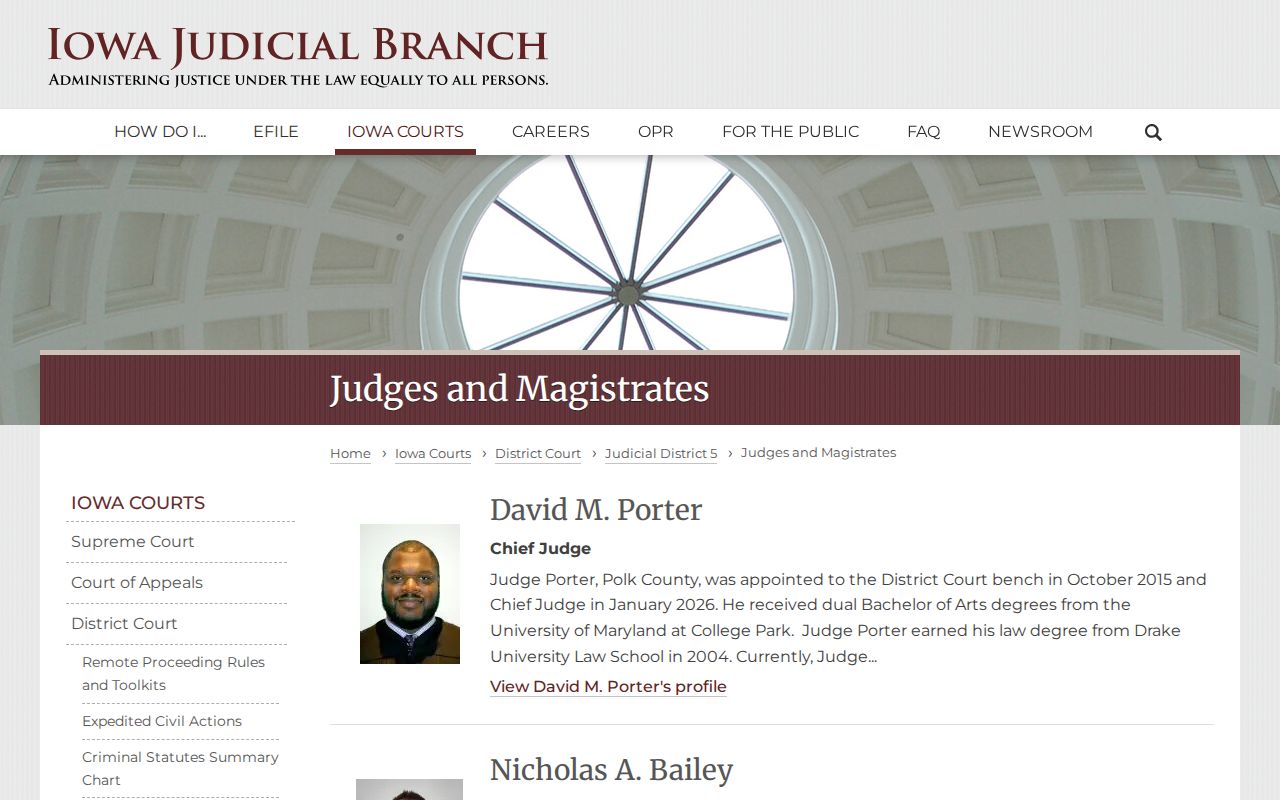
This view identifies court roles without treating a judge list as a warrant list.
Three Decatur County Warrant Checks
Decatur County publishes no public bench-warrant list, and Iowa has no statewide live-warrant query, so a warrant search runs through two channels. The first is Iowa Courts Online. Search a known Case ID or citation number before trusting a name alone, and confirm Decatur County, the case type, the dates, and entries like "failure to appear," "arrest warrant," "bond," "return," "recall," or "quash." The portal is a docket search, not a live warrant status feed. The second channel is the Decatur County Clerk of Court: call 641-219-4265 or visit 207 N Main Street in Leon, Monday through Friday, 8:00 a.m. to 4:30 p.m., and ask what the public docket shows. The Decatur County Sheriff can be reached at 641-446-4111, though it has no dedicated warrant line, and its page points after-hours visitors to the jail at 206 NE 2nd Street without promising a warrant-service window. The official screen makes clear why a docket search is only the first channel.
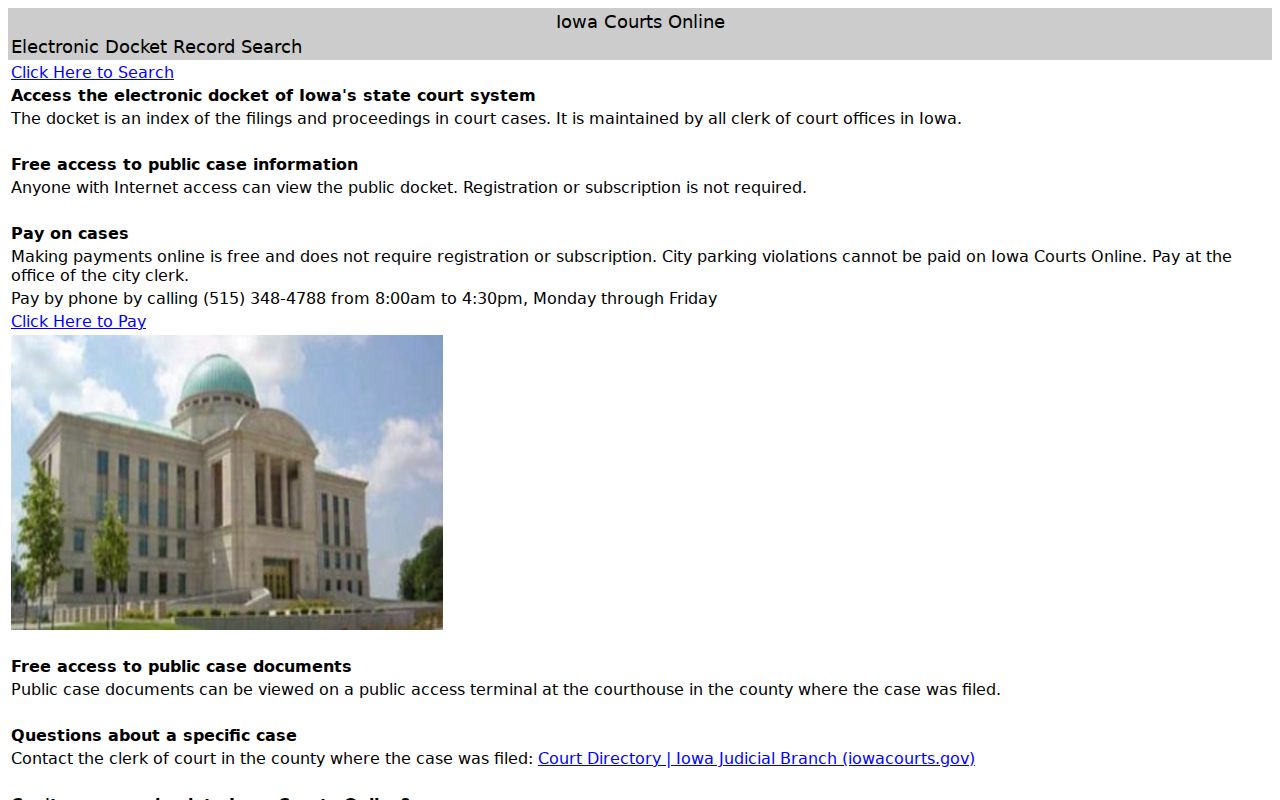
Only the Decatur County clerk or the named agency can confirm the current record and what may be disclosed.
Bench Warrants and Arrest Warrants Compared
Both kinds of order can authorize an arrest, yet they start in different places. A Decatur County bench warrant usually follows a missed duty in a case already before Iowa District Court. A new arrest warrant starts with a complaint and facts offered for a probable-cause finding under Iowa Code section 804.1. The Decatur County arrest warrant search covers that complaint-based path in more detail.
| Feature | Bench or FTA Warrant | New Arrest Warrant |
|---|---|---|
| Typical trigger | Missed appearance or court duty | Probable cause for an alleged offense |
| Case setting | Usually an existing case | May start new criminal process |
| Issuer | Officer handling the court event | Authorized judicial officer |
| Next step | Ask what filing or appearance is due | Seek advice on surrender and bond |
| Status proof | Recall, quash, service, or docket order | Return, service, release, or court order |
Decatur County Bench Warrant Terms
A few docket terms prevent serious reading errors. They describe separate acts, so never swap one for another when talking with the Decatur County Clerk or your lawyer.
- FTA
- Failure to appear for a required court date.
- Issue
- The court creates the warrant; it does not mean it was served.
- Return
- The officer’s report on service or attempted execution.
- Recall
- A court act that withdraws the warrant.
- Quash
- A court act setting aside process, not necessarily the charge.
- Bond endorsement
- Bail or conditions written on or linked to the warrant.
A public docket tracks case history in Decatur County. It can lag an agency's live warrant record, because entries for issue, service, and recall often post at different times.
Resolving a Decatur County Bench Warrant
Decatur County offers no self-clearance form, warrant amnesty, online surrender program, or fee waiver. How a bench warrant gets resolved depends on the judge, the case, and the docket. The clerk can state the procedure and its public status. A lawyer can weigh the risk and effects, and skip any capias form borrowed from another state.
- Locate the case and record its Case ID, citation number, issue date, and exact warrant words.
- Ask the clerk what the docket shows and what filing or appearance the judge requires.
- Consult Iowa counsel about a motion, appearance, surrender, plea, payment, or bond.
- If surrender is advised, call the Sheriff’s official number to ask where and when to report.
- After any step, seek a docket entry or written order that states the warrant result.
Caution: Do not ignore a Decatur County bench warrant or assume that payment alone recalled it; confirm the court’s recorded order.
Decatur County Warrant Forms and Payment
Iowa runs a central library of court forms, and the Iowa court forms library is the place to look. It carries no Decatur County document titled a motion to recall warrant, a motion to quash bench warrant, or a warrant amnesty application. So ask the clerk which process fits your case. A judge might want an appearance, a motion, a written plea, bond, payment, or some mix of those steps, and the official forms page is the right start for that talk.
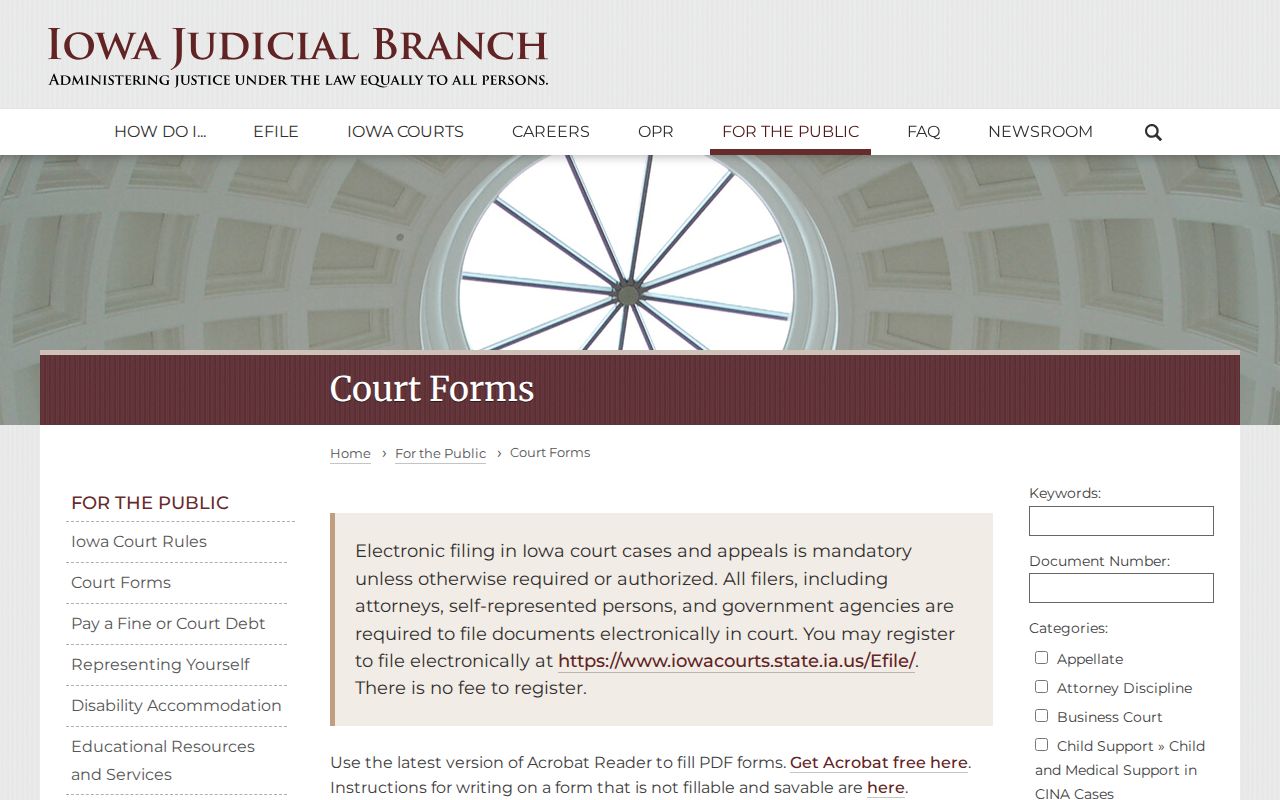
With no named local recall form, verification beats grabbing a generic one from elsewhere. Iowa's Pay a Fine service takes payment online, by mail, in person, or by phone for eligible debt. A receipt only shows you paid. It does not recall a failure-to-appear warrant, so check the docket later. Iowa courts also warn that law enforcement never collects court fines or fees, so hang up on any payment demand by text or phone.
Finding the Court That Issued the Warrant
A Decatur County bench warrant usually comes from Iowa District Court, Decatur County, in Judicial District 5. Iowa folded its municipal, mayor, police, and justice-of-the-peace courts into one unified system years ago. City ordinance and traffic matters that turn into state cases therefore route through district court, even when local police or the sheriff wrote the citation or serves the warrant. The agency that serves it is not always the office holding the record. To trace the order, use the caption, the Case ID, the county, the judicial signature, and the docket events. The clerk keeps the Decatur County district-court files. Magistrates often hear simple misdemeanors plus county and municipal infractions. District associate judges cover a wider range, and district judges hold full trial authority. The judicial officer, not the sheriff, controls whether the warrant is recalled or quashed. The official Decatur County court page confirms this route.
Decatur County Bench Warrant Access
A blank search result cannot prove that no Decatur County bench warrant exists. Iowa guidance says a criminal case with an outstanding arrest or search warrant may stay confidential until service, subject to court rules and orders. Iowa Code section 804.29 also shields certain warrant-securing facts until arrest and return or initial appearance. Juvenile files carry separate limits. The clerk can still explain the public procedural status without releasing a restricted warrant. When a record is not online, send a focused request to the custodian. The Judicial Branch records policy permits verbal or written requests. Name Iowa District Court, Decatur County, the Case ID or citation number, the date range, the document type, and the format you want. Say whether the request involves an executed warrant, a return, or a recall order. Costs may cover copying, postage, retrieval, review, and redaction. No flat Decatur warrant fee or fixed response date is published, so ask the clerk what to expect.
Key point: Court access and live enforcement status differ; verify the public docket with the issuing clerk and the serving agency.